Process · Tanning · Hand sewing
From hide to hand-finished leather
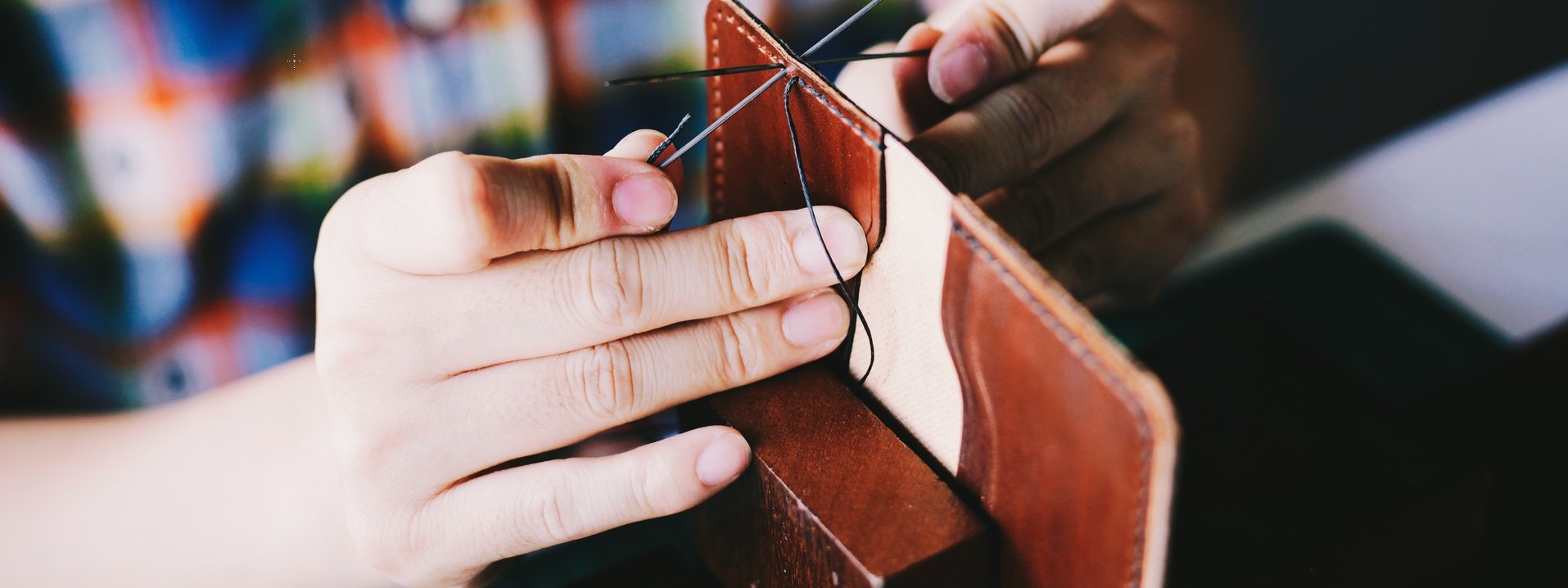
Leather can be tanned with plant materials or with modern chemical baths—both paths transform fragile hide into material that holds shape for decades. In our workshop we work with carefully prepared hides, then carry every bag from pattern to final stitch without production machinery.
Understanding how leather is born—and how seraji stitching holds it together—helps you see why a hand-made piece outlasts anything rushed off a line.
Two crafts, one finished piece
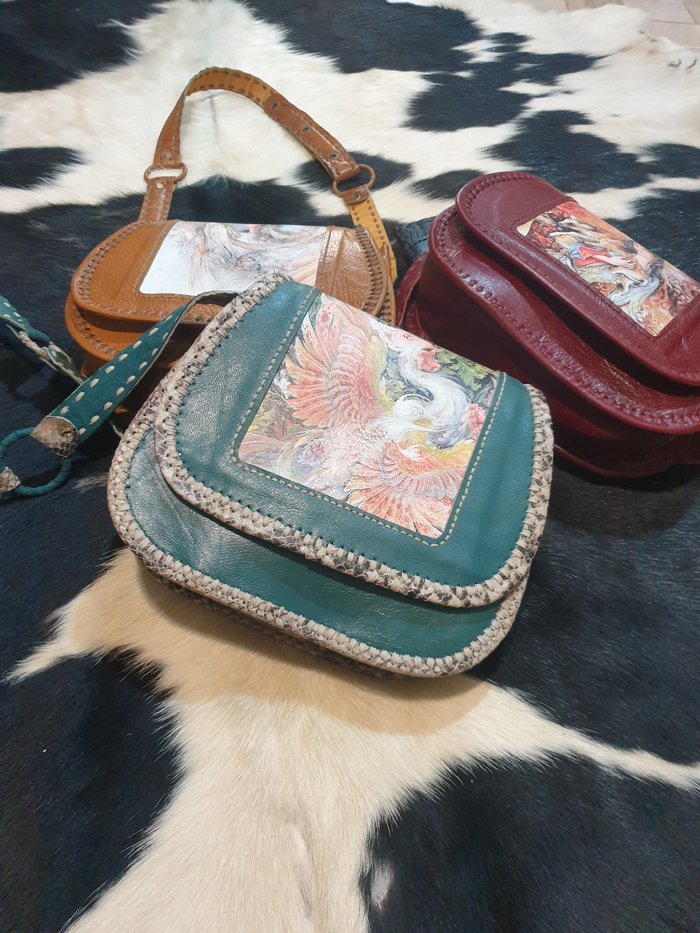
Tanning turns skin into stable leather through salting, soaking, liming, neutralizing, and finishing—eleven deliberate stages before a hide is ready to cut. Sewing is traditional seraji work: design, pattern, punch holes with a fist and awl, pass waxed thread with a blunt needle—no machine wheel driving the seam.
We buy and prepare leather with the same seriousness our grandparents brought to the tannery. Only then do we draw your bag on the hide, place pockets and zippers, and close every edge by hand.
Slow leather. Patient stitches. A product that earns its place in your daily life.
Cheap custom leather heritage →The hide’s journey in four phases
-
Prepare & preserve
Skin is separated, salted, and dried—traditional, industrial, or balloon methods—until it is stable enough to move toward the tannery.
-
Clean & open the fiber
Soaking, liming, and hair removal loosen waste protein and ready the hide for even absorption in later baths.
-
Balance & soften
Lime is removed, the skin is alkalized and degreased, then acidified so fibers stay smooth, flexible, and semi-tanned.
-
Finish & color
Leather is sliced to even thickness, dyed with organic or mineral colorants, and lubricated so it keeps softness and strength.
Eleven tanning stages at a glance
Tanneries are often far from villages; farms move fresh skins to specialists who carry each hide through the steps below. We source leather that has earned this care before it reaches our cutting table.
- Drying and salting. After flaying (traditional, industrial, or balloon method), skins are salted and aired, then dried with warm or natural heat until ready for the next bath.
- Remove additives. Ears, eyes, and other non-leather parts are trimmed—unless a decorative whole skin is intentional, as with some fox or tiger work.
- Soaking. Hides enter water with salt and antibacterial agents to release protein and weaken hair follicles—early quality shows in how cleanly protein separates.
- Liming & detox. Non-fibrous protein is drawn out in lime solution, often with grooved rollers that work the hide evenly.
- Hair removal. Wool or hair is broken down by controlled hydrolysis so the grain stays clean for finishing.
- Deliming. Residual lime must leave completely—otherwise dye uptake fails and leather turns brittle later.
- Alkalizing. An alkaline bath with ammonium salts smooths the surface and increases flexibility before fat liquoring.
- Degreasing. Remaining fat (especially on sheep) is converted and washed away so the hide accepts dye evenly.
- Acidification. Salted acidic baths restore size and keep fibers from swelling—leather emerges semi-tanned and ready to slice.
- Cutting & slicing. Thickness is shaved and sanded so every panel of your bag starts from uniform, full-grain stock.
- Staining & lubrication. Organic or mineral dyes color the leather; finishing oils preserve softness—then the hide is ready for seraji pattern work.
Every hole punched by hand.
Every seam pulled with waxed thread.
Pattern · Cut · Punch · Stitch · Finish
How we sew a bag by hand
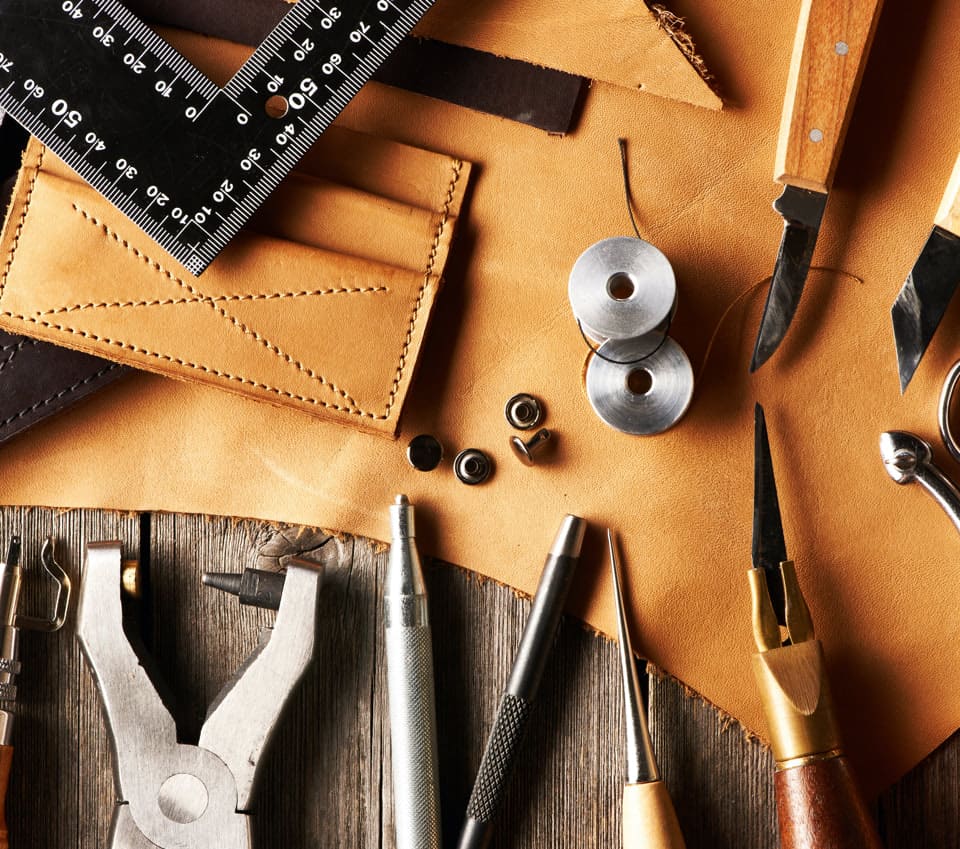
Seraji sewing starts on paper: your design, dimensions, and pocket layout become a pattern traced onto leather with a gel pen. We cut with ruler and rotary cutter—scissors only for curves—then set zippers with iron glue, build lining pockets, and wrap the body for edge work.
Holes are punched where stress will land, never pierced blindly with a sharp needle. A blunt needle carries waxed yarn (about 3 mm, beeswax-coated for strength) through those holes so tension stays even and seams stay closed for years.
Each bag type has its own sequence—totes, walking bags, and compact handbags each demand different order of assembly. The constant is zero machine stitching on the work we sign.
Order custom leather handbags →Tools of traditional seraji work
A short list of essentials—our workshop holds many more specialized items beyond these.
-
Sombeh (awl)
Steel awls sized from fine to heavy punch sewing holes; decorative pegs are separate from structural ones.
-
Fist
A cast-iron punch driven with a hammer—shaped so the artisan can work long sessions without fatigue.
-
Waxed yarn
Hand-waxed thread resists rot, adds strength, and grips the leather—far tougher than ordinary thread on a machine.
-
Seraji needle
Large eye, no sharp point—only for passing thread through pre-punched holes, never for piercing hide.
-
Leather scissors
Industrial or handmade shears, razor-sharp for straight cuts; curves are planned before the blade meets leather.
-
Ruler & cutter
Metal rulers and rotary cutters give smooth, accurate panels; punches protect grain from tearing at stitch lines.
Continue exploring

Process & finished work
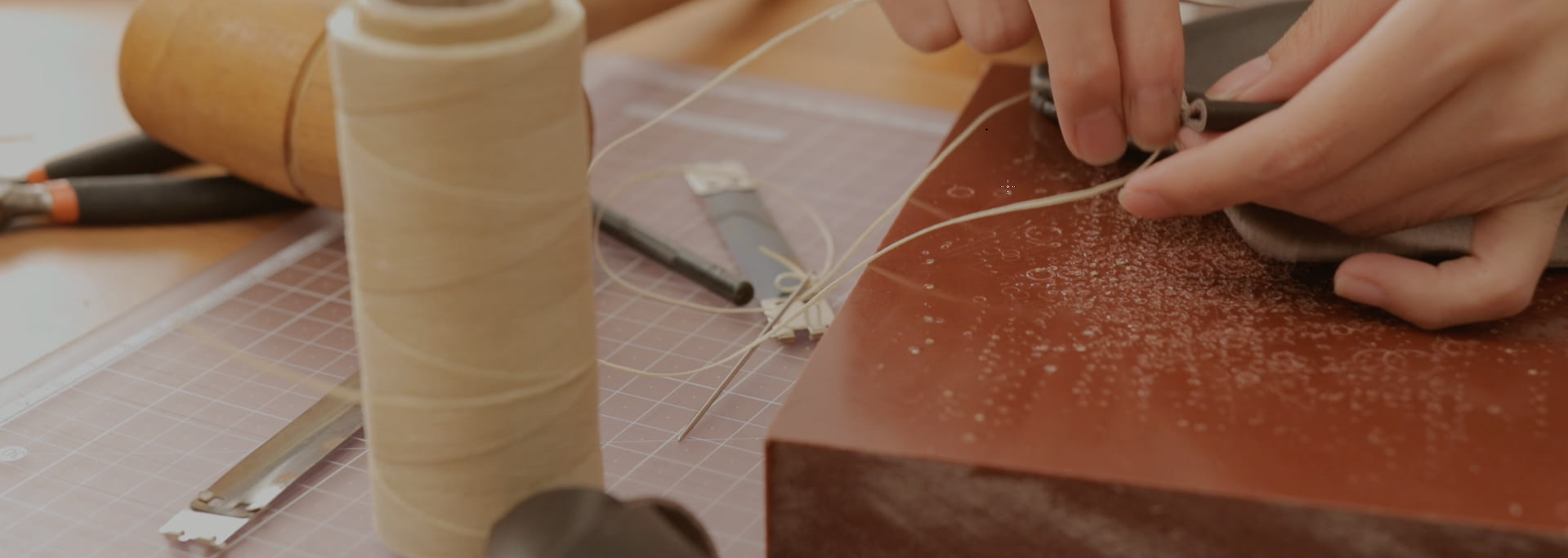
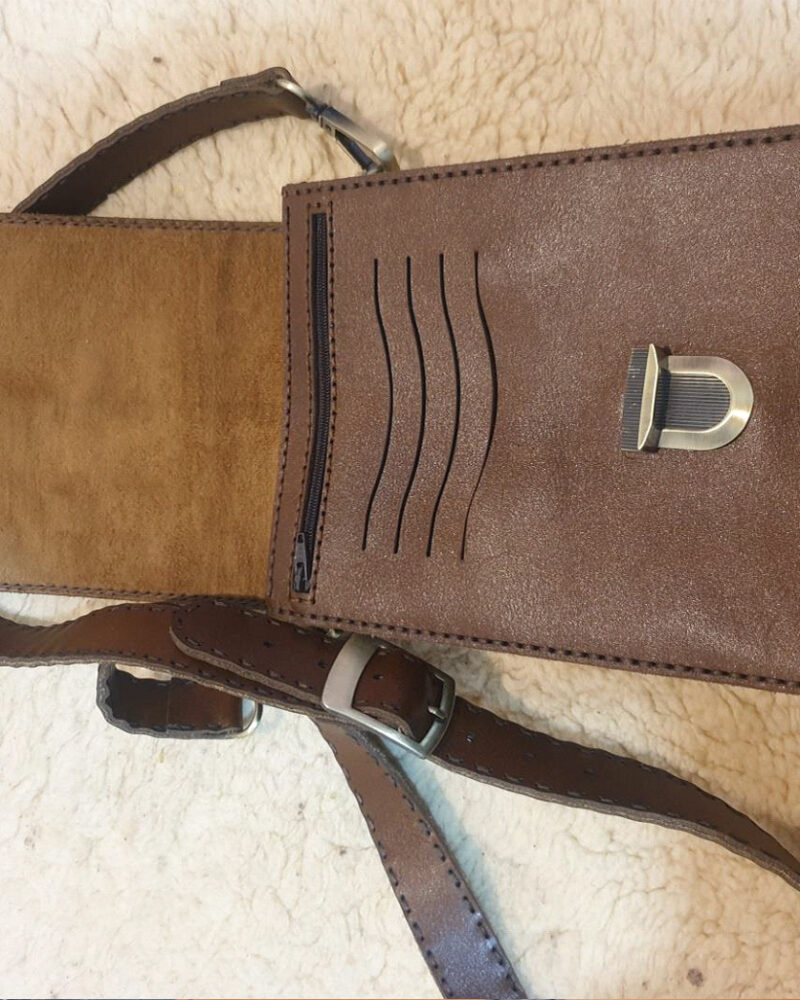
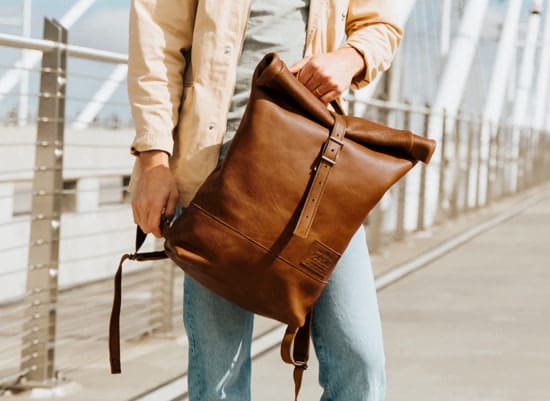
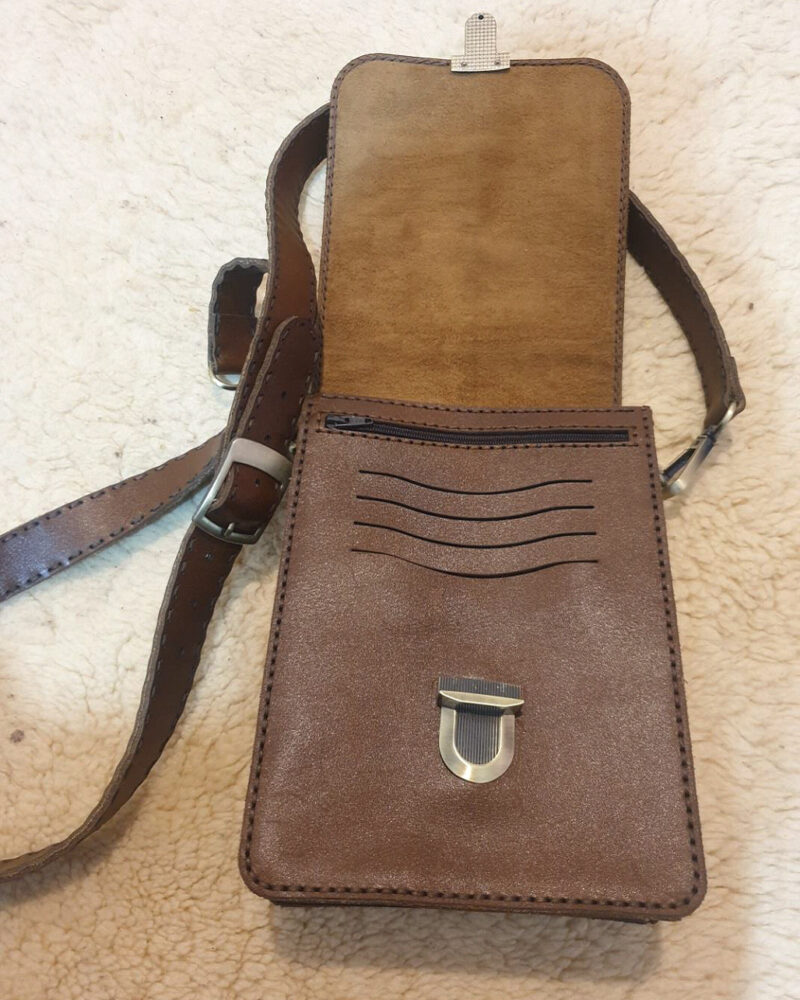
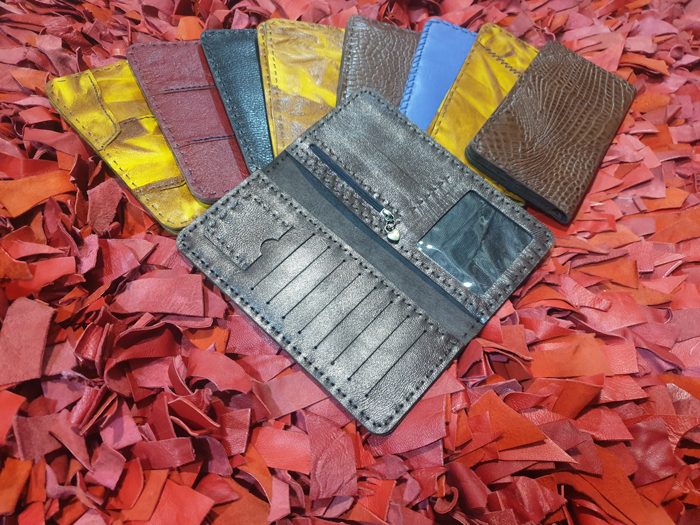
Workshop moments and completed pieces—the result of tanning care and hand sewing combined.

Ready for leather built the slow way?
Share measurements, reference photos, and how you will use the piece—we will tan-select leather, cut, and sew it entirely by hand.